


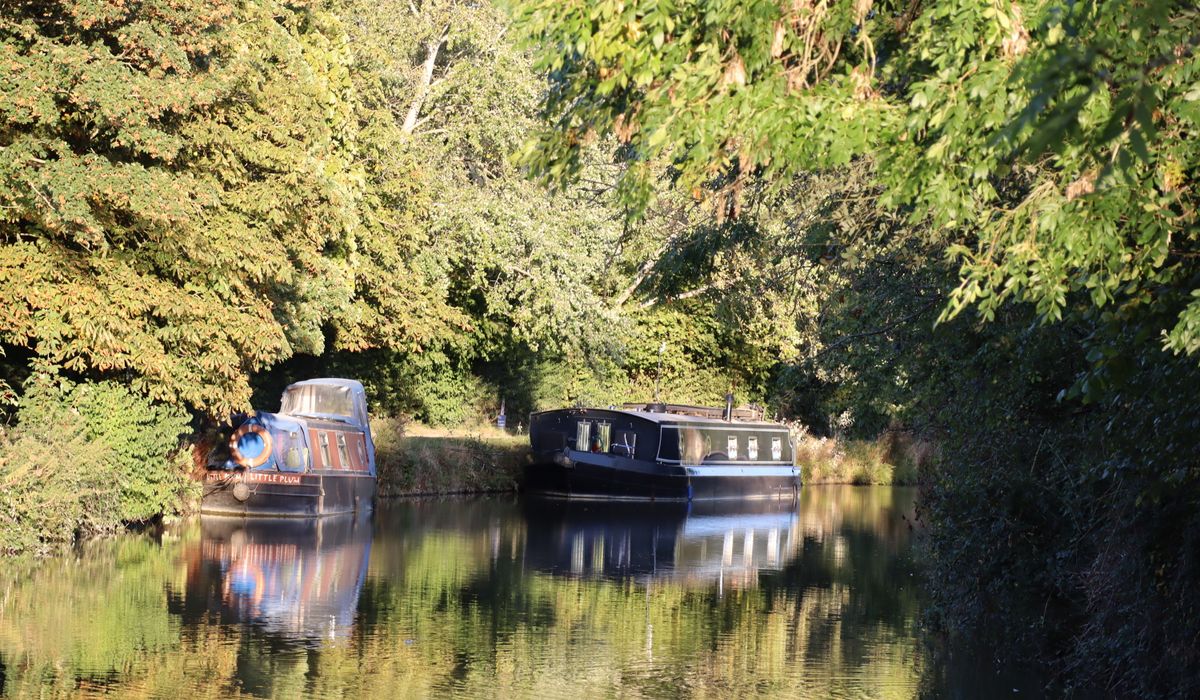
Spring arrives on the cut
There is a fortnight each spring when the canals seem to wake up all at once. The hawthorn along the towpath breaks into leaf, the water finally loses its winter chill, and the birds that have spent months quietly feeding in the margins start to sing, squabble and build. Because canals are slow-moving and shallow, they warm a little later than gardens and hedgerows, so our waterways often run a week or two behind the rest of the countryside. That lag is a gift: if you have already missed the first chiffchaff at home, you can usually catch it again from the stern deck.
March to May is the busiest season on the inland waterways, both for boaters and for wildlife. A little care with where you moor, how fast you cruise and how close you approach can make an enormous difference to what you see — and to whether the nests along the bank succeed.
The flash of blue that makes your morning
Nothing on the cut quickens the pulse quite like a kingfisher. You will usually hear it before you see it — a sharp, thin whistle travelling low over the water — and then catch a streak of electric blue and orange banking between the moored boats.
Kingfishers nest in tunnels dug into vertical banks, often in the soft earth under an overhanging willow or where a tree has fallen and left a clean face of soil. They favour a favourite perch within striking distance of open water, so if you spot one repeatedly on the same branch, it is worth stopping some distance past it and waiting.
- Best time: early morning, before the first hire boat has moved off, and again in the last hour of light.
- How to watch: sit still rather than creep forward. Move the boat, not your body, and the bird will often carry on.
- Fieldcraft: a pair of 8x32 binoculars is plenty on a narrow canal, where most sightings are within twenty metres.
Herons, egrets and the patient hunters
The grey heron is the great stoic of the waterways. You will find it standing motionless at the water's edge, neck drawn in, apparently doing nothing at all — which is precisely the point. Give it credit for patience: it can wait longer than you can.
March is also the month the heronries fill up, with untidy bundles of sticks appearing high in the crowns of tall trees, often well away from the water. Elsewhere, the little egret — brilliant white, black legs, yellow feet — has become a genuinely common sight on southern and midland canals, picking its way through the shallows with a shivering foot-stirring technique that looks faintly comical and works extremely well.
Look too for cormorants drying their wings on marker posts, and for the coot and moorhen families. Coot chicks are grotesque in the most endearing way: bald, red-headed and permanently hungry, chasing their parents across the cut with a furious peeping.
Swans, geese and bankside nests
By mid-March many mute swans are already sitting. Their nests are enormous affairs of reeds and twigs built right at the water's edge, sometimes on a mooring platform or a small island, and they are extremely easy to disturb without meaning to.
The cob — the male — takes his job seriously and will hiss, rise up and come at a boat that presses too close. Treat that as a clear request to move on quietly. Keep at least twenty metres from any nest, and if a swan is feeding in the shallows close to the bank, do not berth alongside it.
- Speed: drop to tick-over past nesting banks; wash from a fast boat can swamp a low nest in seconds.
- Mooring: avoid pinning ropes or stakes into soft vegetated banks between March and August, where water voles and birds may be nesting.
- Dogs: keep them on the lead near the water and out of the margins altogether during nesting season.
Cygnets usually appear from late April, and you may well see them riding on a parent's back — a habit that keeps them warm and out of the way of pike. Canada geese and greylag geese are also busy, and mallard ducklings in their first week are a genuine hazard to navigation: slow right down, and let the family find the bank.
Quiet residents worth looking for
Not everything announces itself. Water voles leave neat, nibbled stems at forty-five degrees and burrow entrances just above the waterline — a clean, round hole rather than the messy larder of a rat. The giveaway is the plop of a diving animal, followed by silence rather than the splash of a swimming one.
Otters are far more common than most boaters realise, particularly on the western canals and connecting rivers. Look for spraint — dark, oily droppings laced with fish scales — on flat stones under bridges and at lock tails. Dawn is the best chance of a sighting.
As dusk falls, bats begin working the sheltered stretches between bridges and hedgerows, and by late April the first damselflies are emerging from the margins. Frogs and toads, meanwhile, will have already laid their spawn in the shallower pounds and offside ponds.
Getting the best out of a spring cruise
Wildlife watching from a narrowboat rewards slowness above all else. Run the engine gently, keep the revs low, and drift past interesting stretches rather than powering through them. Cut the engine and let the boat settle on its mooring line — the birds within a hundred metres will forgive you within minutes.
Do not trim or clear bankside vegetation in spring, even where it looks untidy. That tangle of last year's growth is where the nests are. And if you find an injured bird or an obvious casualty, contact a local wildlife rescue rather than attempting a rescue yourself; swans in particular need specialist handling.
Most of all, take your time. Spring on the cut moves quickly, but it rewards anyone willing to sit in one place with a mug of tea and let the water come to them.


Leave a reply