


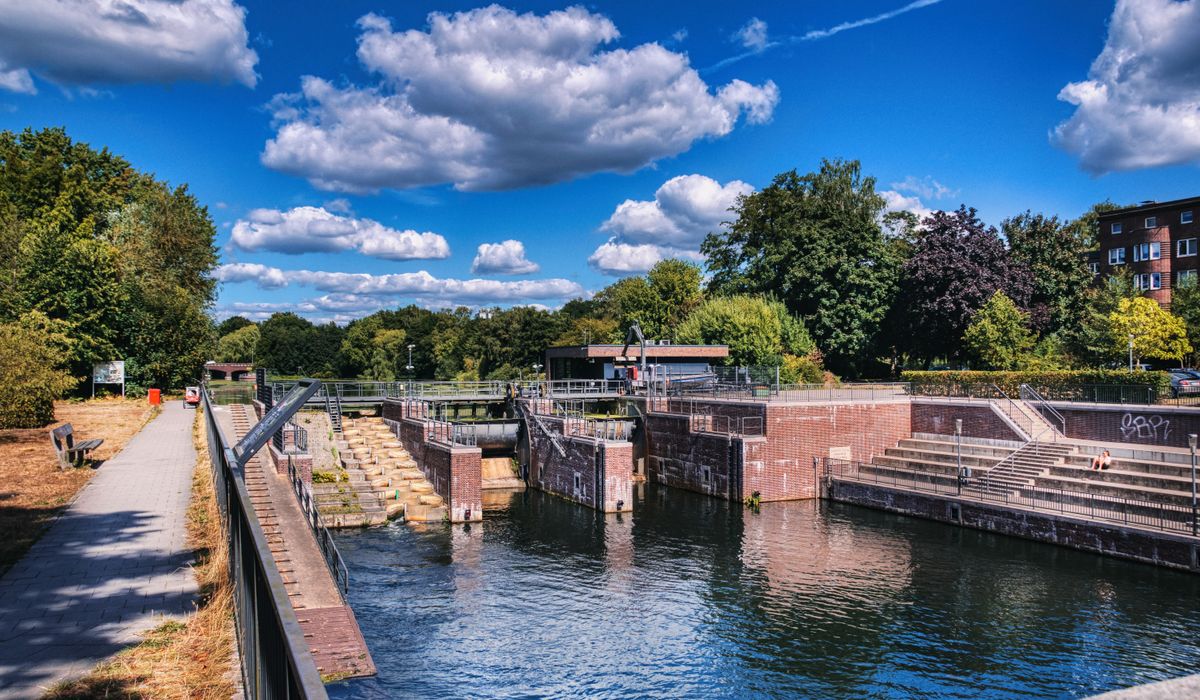
Why the quiet cuts are worth the effort
The main line of most British canals was built for boats with a beam of around two metres and a draught of a metre or so, and that shapes everything: the dredged channel, the lock chambers, the visitor moorings. Step off the main line, though, and you find a different water entirely. The short arm behind a former wharf. The millpond above a weir. A winding hole nobody uses. A long straight of disused branch where reeds have crept in from both banks.
These are places a narrowboat simply cannot reach. They are also, almost always, the best paddling on the cut. On a board or in a kayak you draw only a few centimetres, so you can float over the silt that stops everything else, slip under a low brick bridge, and follow a channel that narrows until the alders meet overhead. Herons, water voles and the occasional otter live in exactly these forgotten edges, and you will see far more of them from a seated height than you ever will from a towpath.
Access rights: what you may paddle, and where
Access on inland waterways is not uniform across the UK, and ten minutes of checking before you unload the car will save an awkward conversation later.
- Licences. Most managed navigations require a licence for any craft afloat, including paddleboards and kayaks. Many authorities offer a reasonably priced annual option, and some include small unpowered craft free with a day registration.
- Unregulated water. Some smaller navigations, flashes, mill leats and reservoirs sit outside the licensed network. These are often privately owned, so ask the landowner or the angling club before you launch.
- Scotland. Inland waters north of the border generally carry a right of responsible access, but that comes with a duty to respect other users and to take your litter home.
- Tunnels and long aqueducts. Many prohibit unpowered craft outright, and some require a booking even for canoes. Check before you commit to a route that passes through one.
- Locks. Portage around them rather than sharing a chamber with a narrowboat unless you are confident and the lock keeper is expecting you. The turbulence near a filling lock is powerful and the cill is unforgiving.
Kit and safety on cold, shallow water
Canal water is cold year round and often shallower than it looks, which makes a fall more of a scrape than a swim but no less shocking. Dress for immersion, not for the car park.
- Wear a buoyancy aid properly fastened, with the crotch strap done up. A board is not a life raft, and neither is a paddle.
- Use a quick-release leash on a paddleboard — a waist belt, never an ankle cuff, which can snag on submerged branches and lock you under. On flowing water, consider no leash at all.
- Carry a dry bag with a phone in a waterproof pouch, a whistle, a head torch and a spare layer. Tell someone your route and expected return time.
- Mind the water quality. Cover any cuts with a waterproof plaster, avoid swallowing water, and wash your hands before eating. Leptospirosis is rare but real, and Weil's disease is worth knowing about.
Reading a backwater as you paddle
Shallow water shows you what it is thinking. Watch for changes in surface texture — a dark, glassy patch usually means deeper water, while riffles and swirls mean a submerged obstruction. Weed beds slow you down long before you see them, and blanket weed in high summer can clog a fin or a rudder in seconds.
Approach any weir or bywash with real caution, and stay well upstream of the crest. The flow accelerates fast and the boil below is not somewhere you want to end up. Low bridges and overhanging trees create strainers: branches that let water through but not people. Where a channel narrows, kneel on the board or sit low in the kayak to keep your head clear and your balance forgiving.
Sharing the water with boats, anglers and wildlife
Backwaters may be quiet, but they are rarely empty. A few courtesies keep everyone happy.
- Moored boats. Pass slowly and quietly, and never use a moored hull as a turning point or a handhold. The occupants may be asleep, working, or simply enjoying their own bit of peace.
- Anglers. Give fishing pegs a wide berth, pass on the far side of the channel, and slow right down. A raised paddle signals apology and goodwill better than a shout.
- Wildlife. Keep ten metres or more from nesting swans in spring, and never push through reed beds — they are habitat, not a shortcut.
- Moving boats. If a narrowboat is coming, hold position near the bank and let it pass. Wash from a moving hull is nothing compared with the wash a slow-moving one leaves behind.
Planning a gentle out-and-back day
Small craft need small plans, and the best days on a backwater are short ones. Aim to launch early, when the water is glassy and the towpath is still empty. Check the wind forecast rather than just the rain — canals are sheltered, so gusts funnel along the cut and can turn a pleasant return leg into hard work.
Look for launch points near a bridge or a public slipway, park considerately without blocking a farm gate or a winding hole, and pick a route that lets you turn around easily rather than one that commits you to a portage you have not checked. Take a flask. Come home muddy. There is a particular kind of quiet at the far end of an arm that no main line can offer, and it is well worth the effort of finding it.


Leave a reply