


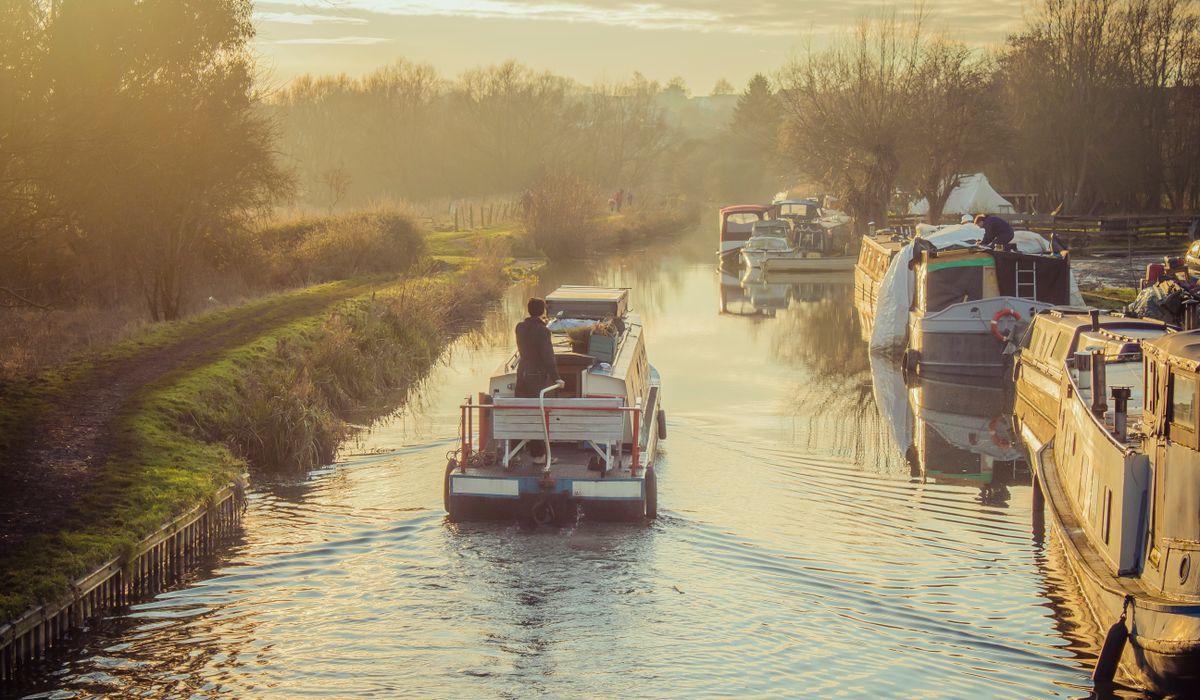
Approach slowly and read the lock before you commit
Coming round the last bend towards a lock, the most useful thing you can do is take your hand off the throttle. A lock cut is a tight, busy piece of water, and everything about it rewards patience. Aim to arrive at tick-over or a shade above, with the boat fully under control, so you have time to work out what is going on before you commit yourself to the chamber.
Read the lock like a page of text. Are the gates open or shut? Is the chamber full, empty, or halfway through a cycle? Has a boat already gone in and begun to rise or fall? Is there a queue of two or three ahead of you, or a boat coming the other way that will want your water? A quick glance at the paddle gear and the colour of the water tumbling below the bottom gates will usually tell you all of this.
If the lock is empty and set against you, and someone is already waiting to come down, the sensible and courteous thing is to slow right down and let them finish. Charging in and starting to empty a lock on top of an approaching boat wins you perhaps two minutes and earns you a great deal of ill-feeling on a stretch of canal where you may well meet the same crew again next week.
Working the lock: paddles, gates and the order of things
Once you are in, secure the boat before anyone touches a paddle. A boat held only by a loose centre line, with the stern drifting towards the cill, is an accident waiting to happen. Get a bow line and a stern line on if the lock is broad, or a good centre line around a bollard if it is narrow, and take a turn rather than just holding on.
Then follow the usual sequence:
- Close the gates behind you properly, and check they meet before you raise a paddle.
- Open paddles gently and gradually, particularly ground paddles, and keep an eye on the boat as the water starts to move.
- Raise the paddle on the same side as the boat first where conditions allow, so the hull is pushed away from the wall rather than into it.
- Watch the stern, especially on the way up — the cill is a hard, unforgiving step and it does not move.
- Lift fenders before you enter, and keep them up until you are clear.
On a broad lock with double gates, the two crew members should work opposite ends in a rhythm rather than both rushing the same paddle. Shout clearly, agree who is doing what, and never open a gate paddle with someone standing on the balance beam.
Sharing a lock sensibly
Locks are one of the few places on the cut where boating becomes a team sport, and sharing is almost always quicker and more pleasant than working alone. If a boat is already in the chamber and there is room, ask before you slide in alongside — most people will be delighted. Two narrowboats in a broad lock use the water far more efficiently than one, and you halve the work for everybody.
Keep the boats apart. Lines should be your own, not the other crew's, and you should each manage your own hull. If the boats are of very different lengths, put the longer one in first and let the shorter one settle where it will sit most comfortably. When breasted up, agree in advance who will open which paddle, and keep the conversation going as the water moves.
Ropes, fenders and a tidy deck
Wet, coiled lines on a lock side are a nuisance and a trip hazard, and trailing rope near a propeller is worse. Keep lines coiled and tidy when they are not in use, and never let a long loop of rope dangle into the water beside the boat. Short, well-managed lines give you control; long, slack ones give you a nasty surprise at the wrong moment.
Fenders should come up before you enter the lock and stay up until you leave. They are not designed to be squeezed between a hull and a lock wall, and a fender caught on the stonework can tip a boat or snap a fitting. The same goes for boat hooks, gangplanks and anything else loose on the roof.
Passing, waiting and leaving things as you found them
If you arrive to find a boat working the lock, offer a hand — taking a line, closing a gate, or simply holding the boat steady while the other crew walks the paddles is a small kindness that keeps things moving. Wait at a sensible distance from the lock mouth rather than nosing into it, and keep the channel clear for anyone coming out.
When you leave, close the gates and drop the paddles unless there is a boat clearly following you in the same direction and in sight. On some waterways the local convention is different, so watch what others are doing and follow suit. Leave the lock set fair for the next arrival if it costs you nothing.
Small courtesies that add up
Slow down past moored boats, keep the noise down early and late, and remember that a lock is a shared front room for everyone on the water that day. You will not always get it perfectly right, and neither will anyone else. A wave, a thank you and a willingness to help with a heavy gate will carry you a long way — and the canals are far more enjoyable when they are worked that way.


Leave a reply